
Dialing Inside Pennsylvania
Ten digits is the default across Pennsylvania. Most Pennsylvania regions carry two or three area codes over the same ground, so the same seven digit number can exist under each of them. The Pennsylvania Public Utility Commission spelled the pattern out when 835 arrived: local and toll calls inside 610, 484, and 835 go out as ten digits, calls from that region to a different area code take 1 plus the ten digits, and operator services need a 0 in front of the ten digits. Full ten digit dialing works everywhere in Pennsylvania, which makes it the habit worth keeping.
Landline, cell phone, or office VoIP, the format holds. Where a difference shows up it is usually that leading 1 on a toll call, and that comes from the carrier rather than from any state rule.
| Call Type | Dialing Format | Example |
|---|---|---|
| Local call inside a Pennsylvania overlay region | area code plus seven digits | 215-555-1234 |
| Call to a different area code | 1 plus ten digits | 1-215-555-1234 |
| Operator assistance | 0 plus ten digits | 0-215-555-1234 |
| Toll free | 1 plus a toll free code plus seven digits | 1-800-242-1776 |
| International from Pennsylvania | 011 plus country code plus number | 011 plus the destination digits |
| Service line | three digit N11 code | 511 for Pennsylvania road conditions |
Note: A call that fails on ten digits will often connect once a 1 is added in front, which is the fastest way to tell a toll route from a local one.
N11 Phone Codes That Work in Pennsylvania
Nine three digit codes reach a service instead of a person. They are the shortest phone codes in daily use, and what sits behind each one is decided state by state. Pennsylvania has real answers for most of them. Traffic goes to a PennDOT system, digging goes to a statewide notification center, community help goes to a statewide referral service, and crisis calls stay inside Pennsylvania call centers whenever one is free. One code on the list is the exception, because 311 belongs to individual cities rather than to the Commonwealth.
| N11 Phone Code | What It Reaches in Pennsylvania |
|---|---|
| 211 | PA 211 for food, housing, utility help, transport, and local referrals. Dial 211 or text your ZIP code to 898-211. Free, confidential, open 24/7/365, and offered in 240 languages. United Way of Greater Lehigh Valley also lists 855-567-5341. |
| 311 | City services, but only in a municipality that runs its own system, such as Philly311 or the Pittsburgh 311 Response Center. There is no statewide 311. |
| 411 | Directory assistance run by your carrier. Charges are common, so check the rate first. |
| 511 | 511PA road and travel information by phone, web, or app. The service also lists 1-877-511-PENN. |
| 611 | The service desk at whichever company sells you the line. |
| 711 | Telecommunications Relay Service, used to connect relay and TTY callers with voice callers. |
| 811 | Pennsylvania One Call for excavation notices. From a number outside Pennsylvania, Philadelphia Gas Works lists 800-242-1776 instead. |
| 911 | Police, fire, and ambulance for anything urgent, answered by the county 911 center. |
| 988 | Suicide and Crisis Lifeline. A Pennsylvania call goes to a Pennsylvania center first, then to another Pennsylvania center, then to the national backup network. |
Important: Do not count on 311 outside a city that operates one. In most of Pennsylvania the borough or township office number is the real equivalent.
The statewide referral service behind 211 also works as a searchable directory for anyone who would rather type than talk.
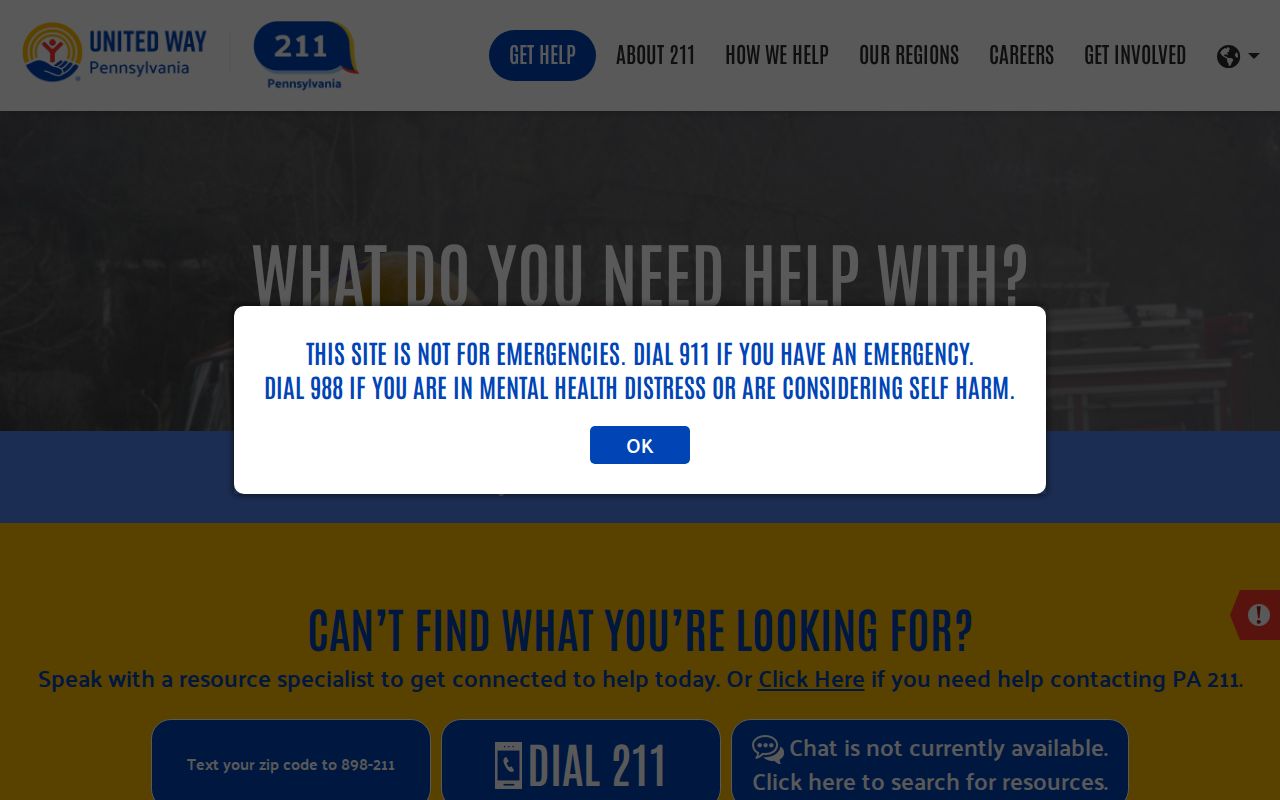
Search, chat, phone, and text options all sit on the PA 211 site, and results are sorted by county so a Scranton answer does not turn up for a York question. The text workflow matters on a statewide page, because services change from one county to the next and the ZIP code is what tells 211 where you are.
Pennsylvania Turnpike and Travel Codes
One Pennsylvania phone code appears on no national list. On the Pennsylvania Turnpike, a driver involved in a crash or incident is told to dial *11 from a cell phone, or 1-800-332-3880. That routes to the Turnpike safety operation rather than to a county 911 center, which matters on a road that crosses county lines every few miles. State Police Troop T patrols the Turnpike, so a *11 call reaches people who already know the mile markers and the interchange layout.
The travel codes stack up nicely for anyone driving across Pennsylvania. Dial 511 for road conditions, or use the same service on the web or through its app. Delay warnings, weather, speeds, traffic cameras, and plow truck status all live in one place. During a major closure, 511PA Connect can push automated calls or texts out to motorists stuck in the backup, which is the rare case of a traffic system phoning you first.
The map view shows how much of the network is covered before you ever pick up a phone.
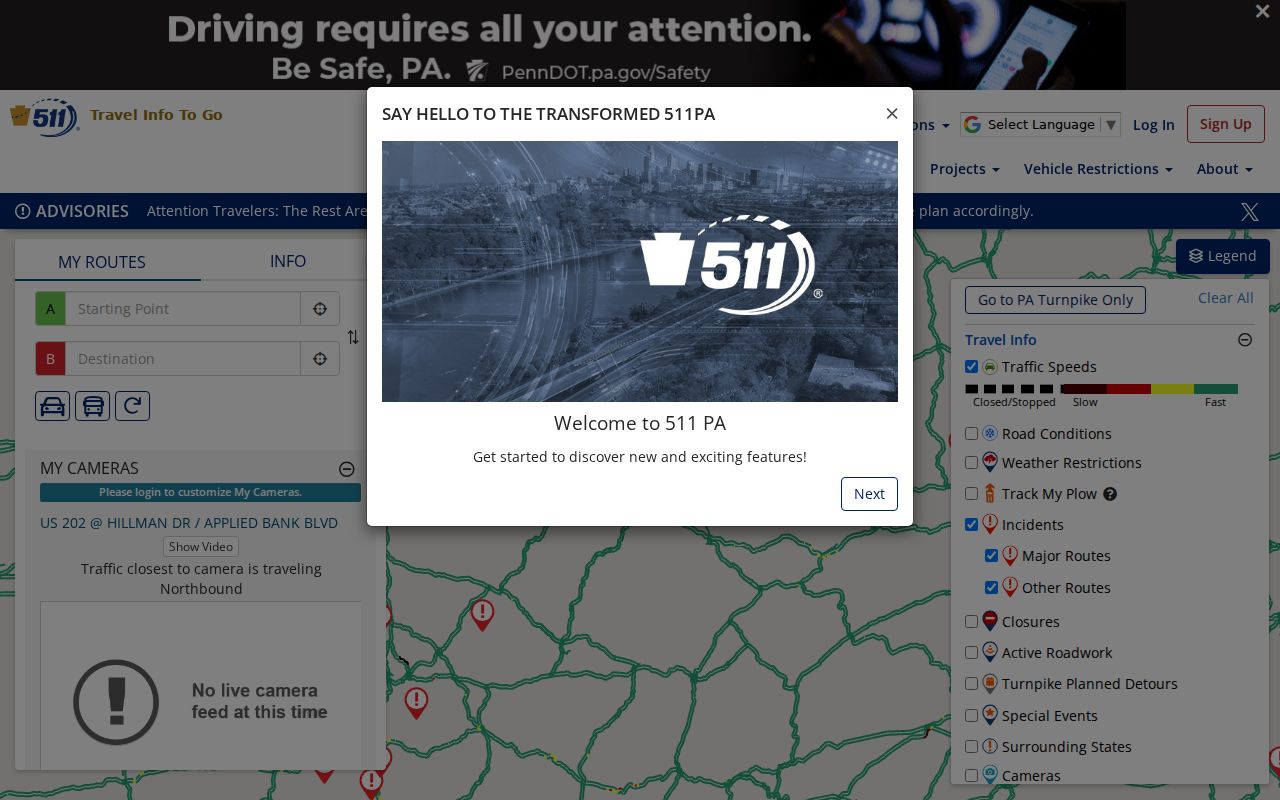
Route notifications are set up from the same screen on 511PA, so a commuter can save a route and choose how the alert arrives. PennDOT also documents the phone, app, and regional alert channels, and the Turnpike publishes its own safety and incident page with the *11 instruction on it.
Pennsylvania One Call and the 811 Code
Before a shovel goes in the ground, 811 is the code. The call goes to Pennsylvania One Call, which passes the request along to the utilities with buried lines in that spot so they can come out and mark them. Pennsylvania homeowners planting a tree and contractors trenching a driveway use the same code. Philadelphia Gas Works reminds customers to call 811 first and lists 800-242-1776 for anyone dialing from a number outside Pennsylvania, which happens more often than you would think near the state border.
Notices can also be filed online rather than by phone.
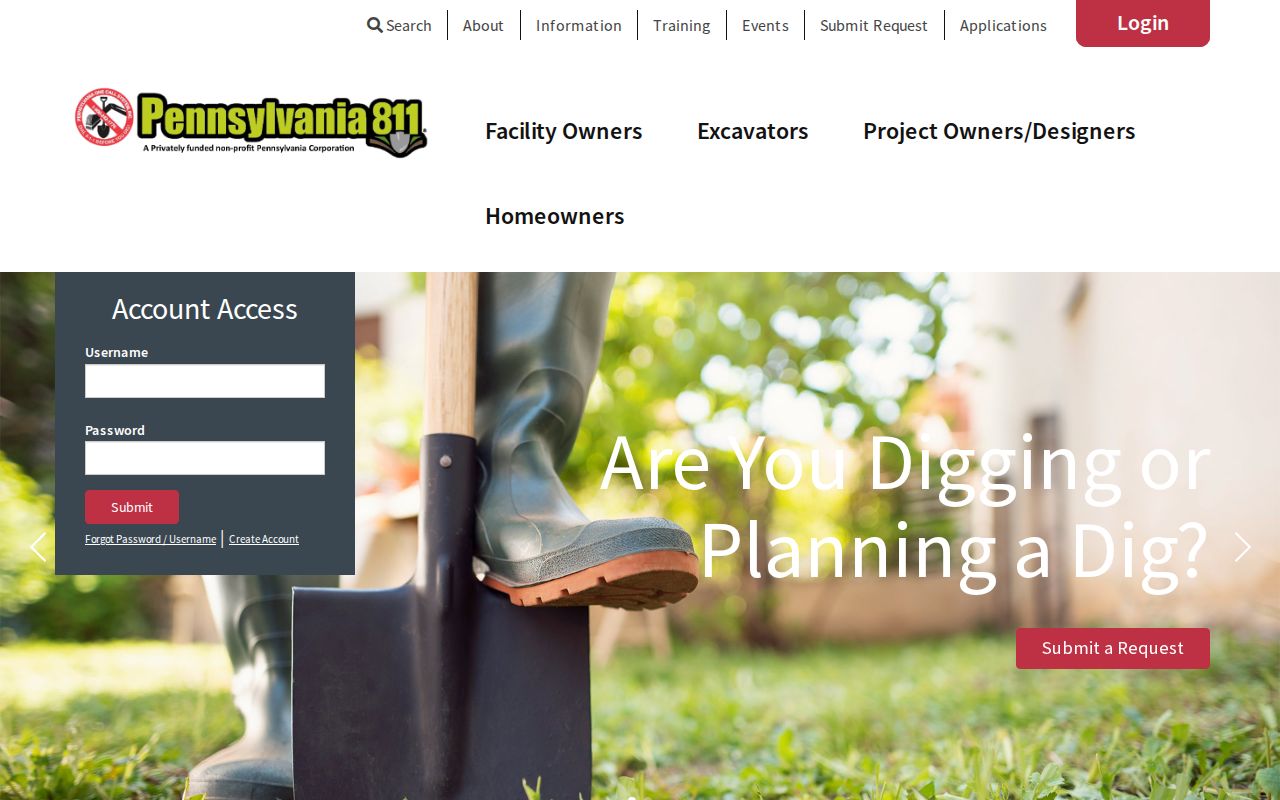
The excavation notice workflows run through the Pennsylvania One Call portal, and the same site explains who has to file and how much notice is required. Utility emergencies are a different matter entirely. A gas odor is a 911 call and a call to the utility emergency line, never an 811 ticket.
Note: 811 arranges line marking on a schedule, so it is a planning code rather than an emergency code.
Star Codes on Pennsylvania Lines
Star codes are typed before a call to change how that call behaves. They came out of the landline era and many still work on Pennsylvania landlines, cable voice lines, and some wireless plans. Support is uneven. A code that works on a Verizon copper line may do nothing on a cable voice line, so treat the list as the common set rather than a guarantee.
| Star Code | What It Does |
|---|---|
| *57 | Flags the call that just came in for a formal trace. The result goes to law enforcement rather than to you, and a police report or a fee may be part of the process. |
| *60 | Builds a block list so chosen numbers stop ringing through. Whether it exists depends on the carrier. |
| *67 | Hides your number for the next call only. Enter it, then dial as usual. |
| *69 | Rings back whoever called last. Blocked and spoofed numbers usually defeat it. |
| *70 | Switches call waiting off for a single call so no beep interrupts. |
| *72 | Starts call forwarding. Enter the code, then the number that should ring instead. |
| *73 | Turns that forwarding back off. |
| *77 | Refuses calls that arrive with the caller ID hidden. |
| *82 | Shows your number for one call on a line that normally keeps it private. |
Two of these get used after a bad call. A trace is the formal route, while caller ID rejection is the quiet route that keeps hidden numbers from ringing at all.
Area Phone Codes by Pennsylvania Region
The three digits at the front of a number are phone codes too, and Pennsylvania has fifteen of them in service. They sort into six regions. Within a region the codes overlap completely, so a newer code is not a different place, only a different vintage of number.
- Philadelphia and the close southeast - 215, 267, 445
- Lehigh Valley, Reading, Chester, Delaware County - 610, 484, 835
- Harrisburg, Lancaster, York, Carlisle, Gettysburg - 717, 223
- Scranton, Wilkes-Barre, Williamsport, the Poconos - 570, 272
- Erie, State College, Altoona, Johnstown - 814, 582
- Pittsburgh and the southwest - 412, 724, 878
Which code covers which county, and how the splits and overlays got there, is laid out with the Pennsylvania area codes and their assignment years.
Toll Free and Premium Prefixes
A toll free code puts the cost of the call on the business or agency that answers. Seven of them are in general use, and they behave like area codes even though they point at no geography at all. A Pennsylvania caller reaching a 1-800 number has no idea whether the desk is in Harrisburg or Houston. At the other end of the scale sit the premium prefixes, which bill the caller instead, and many Pennsylvania lines block those by default.
The seven in general circulation are 800, 888, 877, 866, 855, 844, and 833. Each one opened as the pool ahead of it filled up, which is why 800 reads as established and 833 reads as new. They all work the same way once the call connects. Three more prefixes sit just outside that set and behave differently.
- 822 - held back for a future toll free expansion, so confirm it is live before trusting a number that uses it.
- 900 - premium rate. The caller pays, and plenty of Pennsylvania lines block the whole prefix by default.
- 976 - an older premium and information prefix. Availability varies by carrier, and blocking is common.
Scammers like the toll free look because it reads as official. A toll free code proves nothing about who answers, so verify the number against the agency's own website before handing over anything.
Dialing Out of Pennsylvania with +1
Pennsylvania sits inside the North American Numbering Plan, and the country code for that whole region is +1. A ten digit Pennsylvania number is really a +1 number with the country code left off, which is why the same digits work from Philadelphia, Toronto, or San Juan without any change. The +1 only becomes visible when a call crosses in from outside the region, or when a phone travels.
- Calling inside Pennsylvania: dial all ten digits, area code first.
- Calling another area code, in state or out: dial 1, then the ten digits.
- Calling abroad from a landline: dial 011, then the country code, then the number.
- Calling abroad from a mobile: hold 0 until a + appears, then the country code, then the number.
- Someone abroad calling a Pennsylvania number: their own exit code, then 1, then the ten digits.
- Saving a contact: store it as +1 followed by the ten digits.
That last step saves grief later. A contact stored as +1 plus ten digits keeps working while roaming, while syncing between phones, and while traveling outside the country.
Local Exchange Phone Codes in Pennsylvania
Every Pennsylvania number breaks into three parts: the area code, then a three digit exchange code, then the four digit line number. That middle piece is the one most people never think about. It is assigned to a rate center, which is a billing and geographic unit, and Pennsylvania rate centers carry familiar names. Philadelphia, Allentown, Bethlehem, Reading, West Chester, Media, Norristown, and Pottstown cover the southeast. Harrisburg, York, Lancaster, Gettysburg, and Carlisle cover the middle. Scranton, Wilkes-Barre, Williamsport, Bloomsburg, and Stroudsburg cover the northeast, while Erie, State College, Altoona, Johnstown, and Pittsburgh handle the west.
The national administrator publishes the assignment records for anyone who wants to check one. Each record shows the state abbreviation, the area code and exchange, an operating company number, the company name, and the rate center. NANPA is blunt about the limits of those files, warning that they do not carry everything a carrier needs for routing and billing, so they are a reference and not a complete picture of who serves a line today.
Portability weakens the guess further. A number can move to a new carrier and keep every digit, so the company named against an exchange may have nothing to do with the current service. Use the exchange as a starting clue and confirm it somewhere else.
Campus and Institution Dialing Habits in Pennsylvania
Large Pennsylvania institutions build their own internal shorthand on top of the public codes. University of Pennsylvania Athletics says all of its listed numbers sit in area code 215, and that any number starting with 898, 573, or 746 is a campus extension that a campus phone can reach by dialing the last five digits. Penn State runs the opposite pattern, where one public switchboard, 1-814-865-4700, fronts a huge directory, and the 814-865 exchange is recognizable to anyone who has spent time around University Park.
Vanity codes show up too. The Free Library of Philadelphia answers the whole system on 1-833-TALK-FLP, which dials as 833-825-5357. Letters on a keypad are just digits with a costume on, and a vanity number is easier to remember than the seven digits underneath it.
Note: A five digit campus extension only works from inside that campus phone system, so from the outside dial the full ten digit number.
Spam Labels and Caller ID Authentication
A "Likely Spam" or "Spam Risk" tag on the screen is not a phone code, but it comes from the same plumbing. Under the framework the FCC calls caller ID authentication, carriers digitally sign a call as it is handed from one network to the next. The receiving carrier can then see whether the caller ID survived the trip intact or was dressed up somewhere along the way.
The important limit is easy to miss. Authentication says the number was not spoofed. It says nothing about whether the person on the other end is telling the truth. A perfectly signed call can still be a scam, and a legitimate Pennsylvania business can pick up a spam label by mistake after a burst of outbound calls. Read the label as one signal among several, alongside the exchange, the caller ID name, and whatever a directory turns up.
Pennsylvania Phone Code Definitions
A few terms come up whenever Pennsylvania numbering is discussed, and each one names a different layer of the same phone number.
- NPA
- The three digit area code. Numbering plan area is the formal name, and it leads every ten digit Pennsylvania number.
- NXX
- The three digits after the area code. They tie a number to a rate center, which is a billing area rather than an address.
- N11
- A three digit shortcut that reaches a service instead of a person. Nine are in use.
- Vertical service code
- A star and two digits entered ahead of a call to change how that one call is handled.
- Toll free prefix
- A code that shifts the cost of the call to whoever answers. The 800 family is the whole set.
- NANP
- The numbering system Pennsylvania shares with the rest of the United States, Canada, and other territories under country code +1.
Looking Up a Pennsylvania Phone Code
Two federal sources answer almost any Pennsylvania phone code question. The numbering administrator keeps the working records: which area codes are active, which exchanges are assigned, which carrier holds them, and what the dialing plans look like. The FCC handles the consumer side, including why ten digit dialing spread and how caller ID authentication is supposed to work.
Exchange level records sit on the central office code assignment page, sorted by state and then by number. For a label dispute rather than a numbering question, the FCC explanation of caller ID authentication is the better starting point.